Perennials Pruning Guide
Timing tips for a tidy, healthy garden across Canada
Pruning perennials at the right time keeps plants healthy, encourages blooms, and makes spring cleanup easier. This guide gives practical tips for late fall, early spring, and summer pruning — plus a handy cheat sheet for common Canadian perennials.
When to Prune
- Late Fall (after frost): Cut back dead foliage to make spring cleanup easier. Benefits: reduces disease, tidies garden, allows mulch coverage. Caveat: leave some seed heads or stems for winter interest and birds.
- Early Spring (before new growth): Best for perennials that bloom on new wood (coneflowers, phlox). Remove winter damage and shape before growth starts.
- Summer Pruning (after flowering): Deadhead spent flowers to encourage a second bloom, keep plants tidy, and reduce seed spreading.
Practical trick: For hardy perennials, a light fall cut-back plus a deeper spring cleanup works nicely — keeps spring chores manageable.
Tip from the Lion Gardener
Always check if your perennial blooms on old or new wood — you don’t want to cut next year’s flowers. Leave a few stems for birds; they’ll thank you in winter. Clean your tools between plants to prevent disease and mulch after pruning to protect roots over harsh Canadian winters. A handy perennial pruning cheat sheet for you.
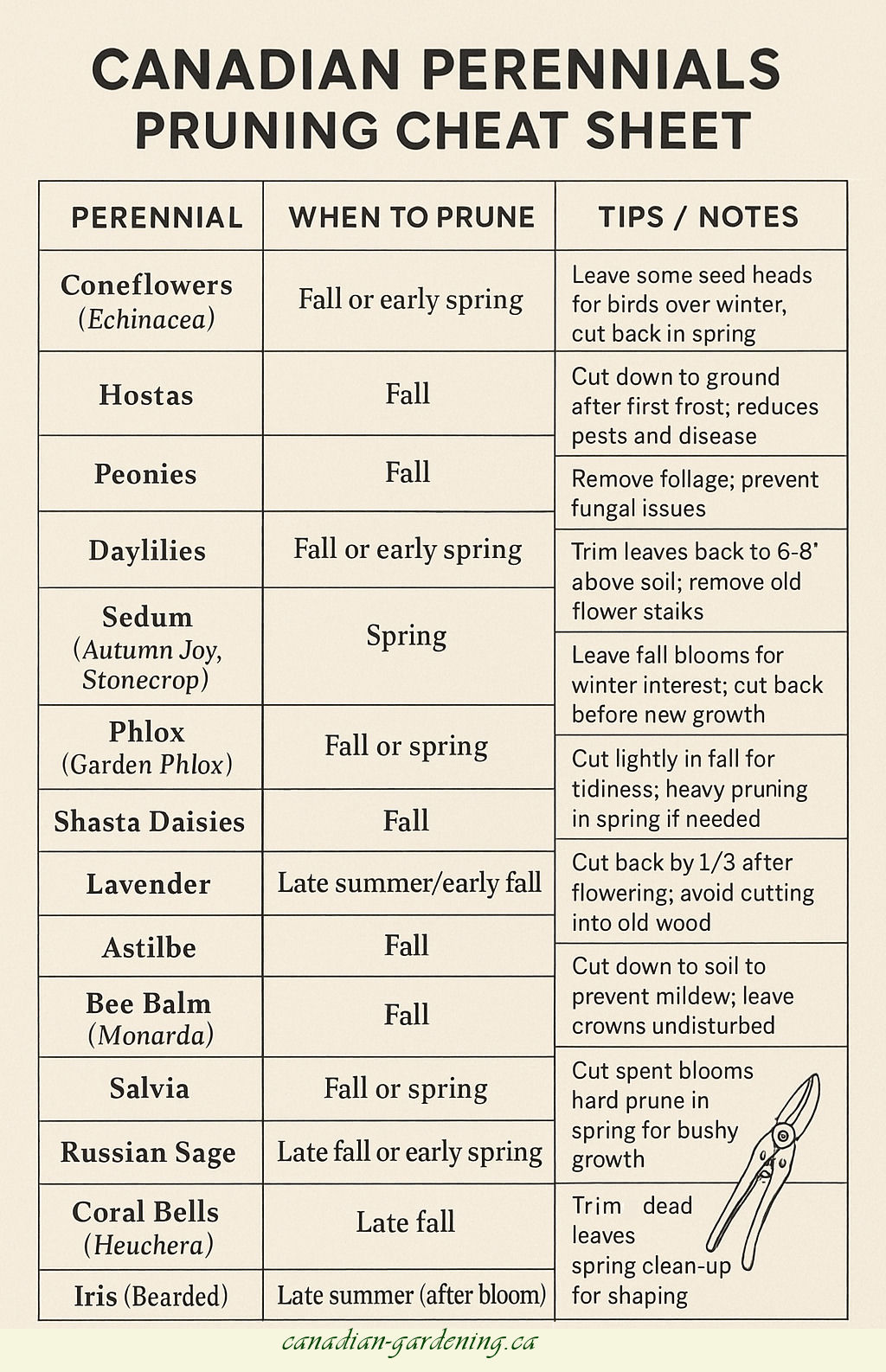
Canadian Perennials Pruning Cheat Sheet
| Perennial | When to Prune | Tips / Notes |
|---|---|---|
| Coneflowers (Echinacea) | Fall or early spring | Leave some seed heads for birds; cut in spring before new growth. |
| Hostas | Fall | Cut down to ground after first frost; reduces pests and disease. |
| Peonies | Fall | Remove foliage to prevent fungal issues; stems can be composted. |
| Daylilies | Fall or early spring | Trim leaves back to 6–8” above soil; remove old flower stalks. |
| Sedum (Autumn Joy, Stonecrop) | Spring | Leave fall blooms for winter interest; cut back before new growth. |
| Phlox (Garden Phlox) | Fall or spring | Light fall pruning for tidiness; heavier pruning in spring if needed. |
| Shasta Daisies | Fall | Deadhead spent flowers; cut down stems before winter or wait until spring. |
| Lavender | Late summer / early fall | Cut back by 1/3 after flowering; avoid cutting into old wood. |
| Astilbe | Fall | Cut down to soil to prevent mildew; leave crowns undisturbed. |
| Bee Balm (Monarda) | Fall | Cut back to 2–3” above soil; reduces powdery mildew. |
| Salvia | Fall or spring | Cut spent blooms; hard prune in spring for bushy growth. |
| Russian Sage | Late fall or early spring | Cut back dead stems; spring pruning encourages new growth. |
| Coral Bells (Heuchera) | Late fall | Trim dead leaves; spring clean-up for shaping. |
| Iris (Bearded) | Late summer (after bloom) | Remove spent flower stalks; trim foliage to 6–8” in fall. |